Understanding Training Load
The Training Load section includes Cardio Load and Muscular Load. Together, these metrics help you understand how your recent training compares with your longer-term workload and ability to recover.
You can learn more about Cardio Load and Muscular Load on the Tryon AI blog.
Change the Chart Range
You can change the period displayed on the chart by selecting:
7D
30D
3M
1Y
YTD
Customize the Chart
To customize the chart:
Tap the chart icon at the bottom of the chart.
Adjust any of the following settings:
Selected Date: Choose the date you want to view.
Lookback: Change how far back the chart displays data.
Display By: Display the data by Day, Week, or Month.
Preferences: Choose whether to display your Activity Status.
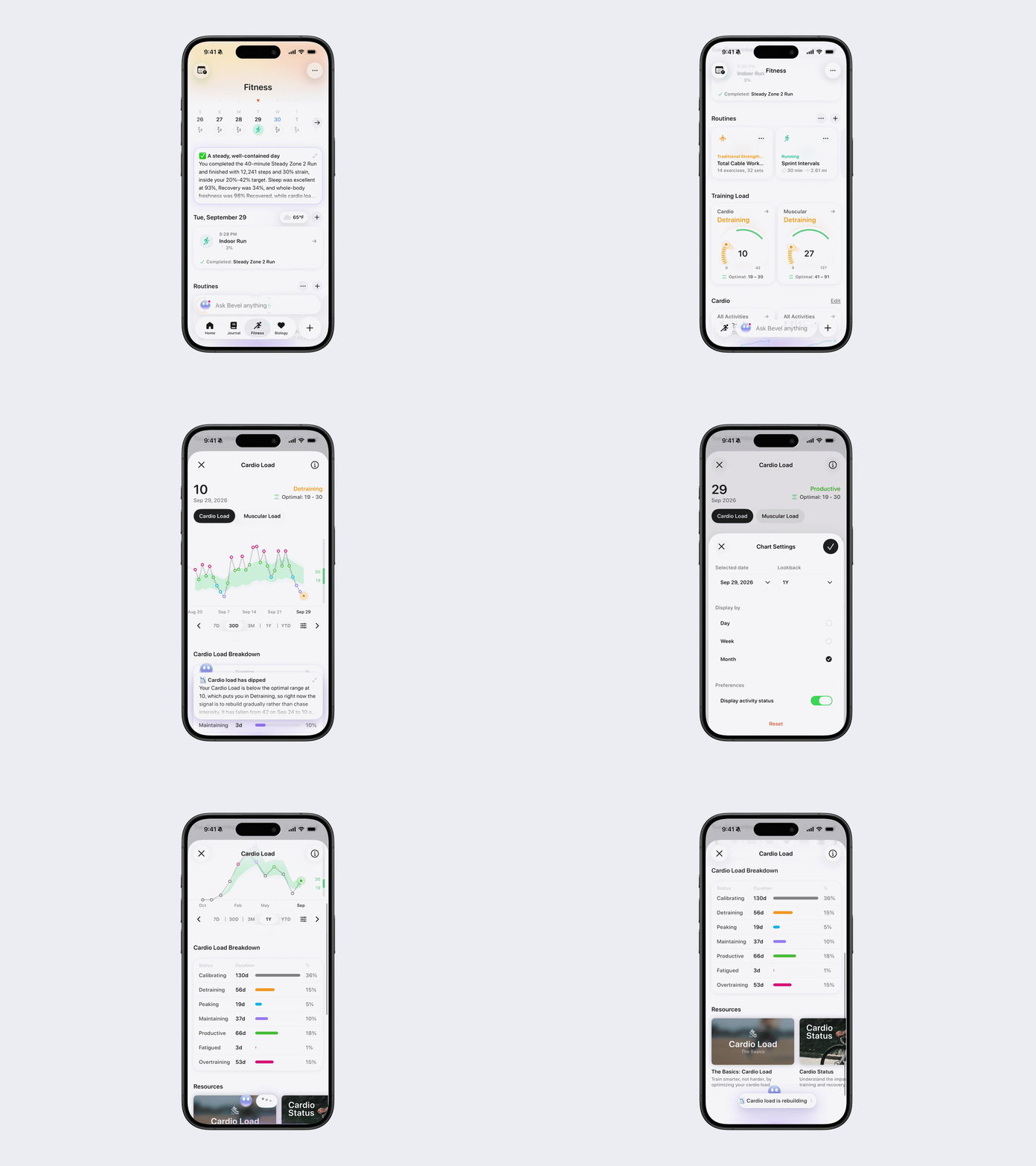
Cardio Load
Cardio Load helps you understand whether your cardiovascular training is balanced or whether you may be detraining or overtraining.
It compares your short-term load from the last 7 days, also known as Acute Training Load (ATL), with your long-term load from the last 6 weeks, also known as Chronic Training Load (CTL).
The dynamic range on the chart represents your bodyâs ability to adapt to changes in cardiovascular training over time.
Cardio Load Calibration
Tryon AI calibrates Cardio Load using your recent workout history and resting heart rate baseline.
Tryon AI needs at least 10 qualifying cardio training days within the past six weeks, plus sufficient recent activity, to establish your baseline. Multiple workouts on one day count as one training day. Calibrating can return after a break from training.
Cardio Load will display Calibrating while Tryon AI builds a stable training profile.
Cardio Load Statuses
Cardio Load has seven possible statuses:
Calibrating: Tryon AI is building your training profile. Continue recording workouts for more accurate insights.
Detraining: Your cardio fitness may be declining. Consider gradually increasing your training.
Maintaining: Your training is supporting your current level of cardio fitness.
Productive: Your training is improving your cardio fitness while allowing for recovery.
Peaking: Youâre at peak cardio fitness and are well recovered.
Fatigued: Your training load is exceeding your current recovery capacity.
Overtraining: Your training load is significantly exceeding your ability to recover, increasing your risk of injury.
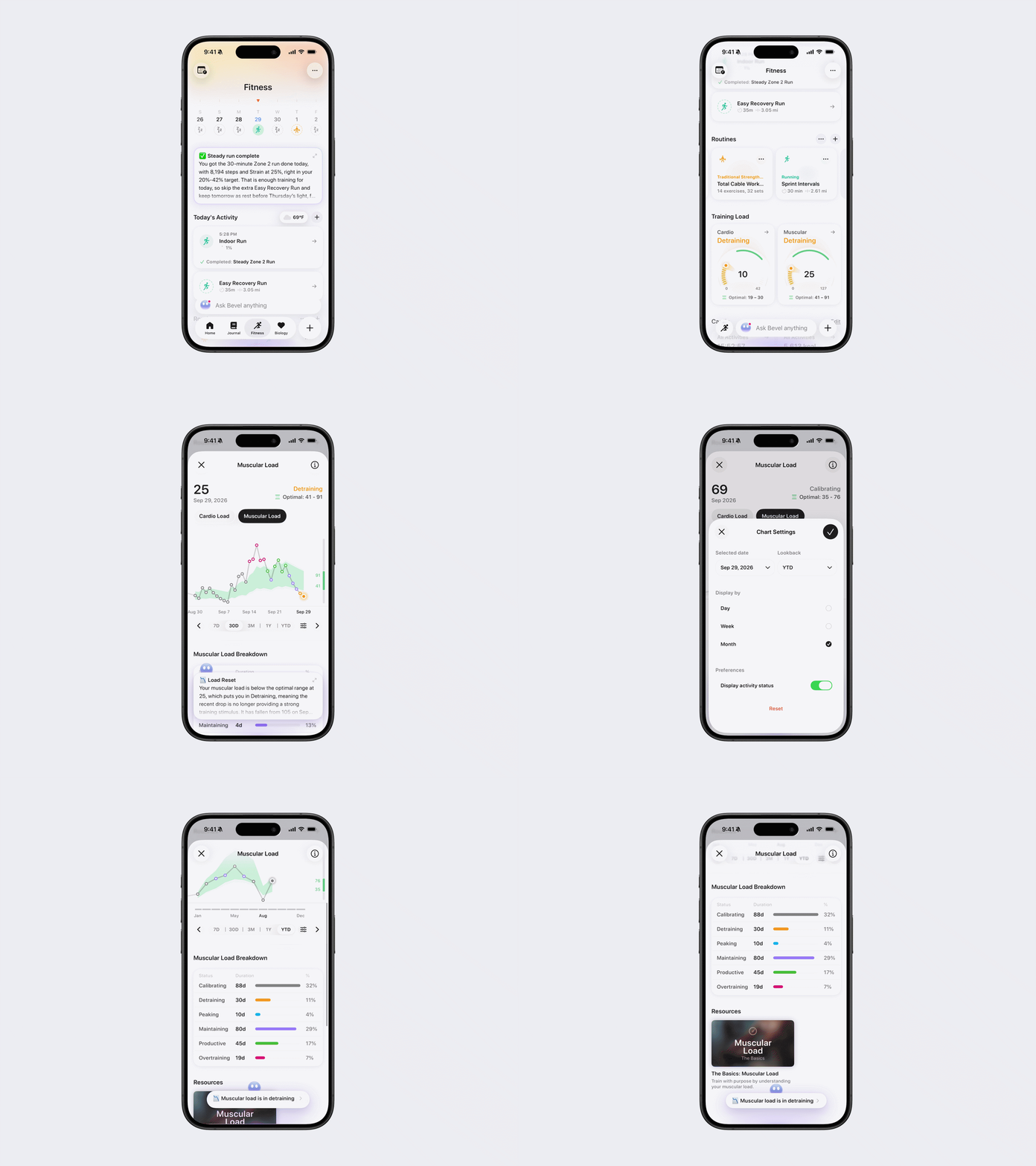
Muscular Load
Muscular Load helps you understand whether the workload placed on your muscles across supported strength and cardio workouts is balanced, increasing, or exceeding your musclesâ ability to recover.
It compares your short-term muscular load from the last 7 days with your long-term muscular load from the last 6 weeks.
The dynamic range on the chart represents your musclesâ ability to adapt to changes in training over time.
Muscular Load Calibration
Muscular Load will display Calibrating while Tryon AI builds a baseline from your recent workout history.Â
For Muscular Load, a muscle generally needs at least 10 qualifying training days within a rolling six-week window, plus sufficiently recent muscle-loading activity, to establish a personalized baseline. Multiple exercises in a day do not automatically count as multiple qualifying days. A category also needs at least one calibrated muscle within it; overall load needs at least one calibrated muscle anywhere in the body.
Once Tryon AI has enough consistent data, your Muscular Load status will update automatically.
Muscular Load Statuses
Muscular Load has six possible statuses:
Calibrating: Tryon AI is building your muscular training profile. Continue recording workouts for more accurate insights.
Detraining: Your recent muscular load is below your usual range, which may lead to detraining over time.
Maintaining: Your muscular load is supporting your current level of conditioning.
Productive: Your muscular load is driving adaptation while allowing for recovery.
Peaking: Your muscles are well recovered and prepared to perform at their best.
Overtraining: Your muscular load is significantly exceeding your musclesâ ability to recover, increasing your risk of injury.